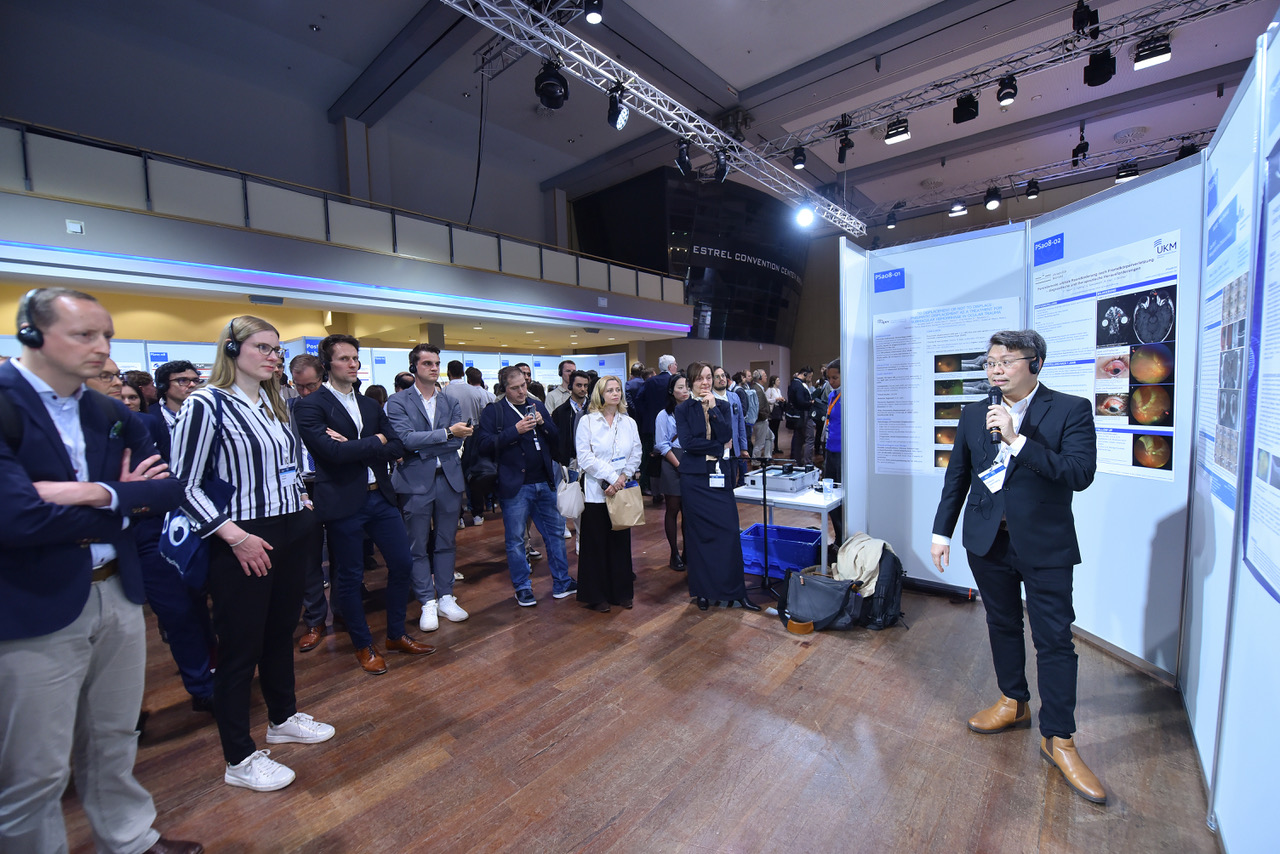
What started as a simple case submission turned into a DOG debut, a scholarship surprise and a proud first for Philippine ophthalmology.
“Good Relations!” my professor once told me. That phrase echoed in my mind as I made my way to the 2025 German Ophthalmology Society (DOG) Congress at the Estrel in Berlin.
I first attended the DOG back in 2019, when I was still a guest researcher in Heidelberg under the auspices of Prof. Gerd Auffarth at the David J. Apple Laboratory, Department of Ophthalmology, Heidelberg University. Back then, I was merely a delegate. And, truthfully, more of a wide-eyed spectator. My Deutsch was minimal, to say the least.
READ MORE: More Than One-third of Older Asian Adults Have Undiagnosed Eye Disease, JAMA Study Shows
Fast forward several years (and three international ophthalmology fellows) later, I received quite the surprise: my application for the DOG Scholarship Grant had been approved. I had submitted two pieces of work: a talk titled Ophthalmic Care in the Philippines and a poster presentation on Sympathetic Ophthalmia Treatment: A Case Treated for Three Years.
I had simply rummaged through my collection of cases and previous talks, not expecting much. Two months later, in May 2025, an email from Jutta landed in my inbox with wonderful news. My poster on sympathetic ophthalmia had been accepted for presentation. And not just for display. I’d also have to give a three-minute talk about it, followed by a two-minute Q&A.
READ MORE: New NHS Platform Puts AI for Diabetic Eye Screening Through Real-World Stress Test
Even more exciting, my lecture Ophthalmic Care in the Philippines would be part of the international ophthalmology session. I later gave it a more poetic title: Ophthalmology Across 7,641 Islands: The Philippines.
The poster session took place on September 27, 2025—a personal milestone, as I became the first Filipino ophthalmologist invited to give a poster talk at the DOG. That was quickly followed by my presentation on Philippine ophthalmic care, a seven-minute talk with a lively three-minute Q&A. Another first: it was the debut of a Filipino speaker in an all-German-speaking meeting.
READ MORE: Seeing Beyond Vision Loss: Integrating Mental Health Into Retinal Care
The third highlight came as an even greater honor: I was awarded the prestigious DOG Fellowship Grant, which included an all-expense-paid travel, accommodation and a two-week stipend for observership and shadowing in my chosen field. I selected Dresden University, only a few hours by train from the Estrel in Berlin.
Dresden also held special meaning. It’s where my former Heidelberg colleague, Dr. Ramin Khoramnia, now serves as chief of Ophthalmology, and where another colleague and former international fellow, Dr. Tadas Neujokaitis, is currently practicing.
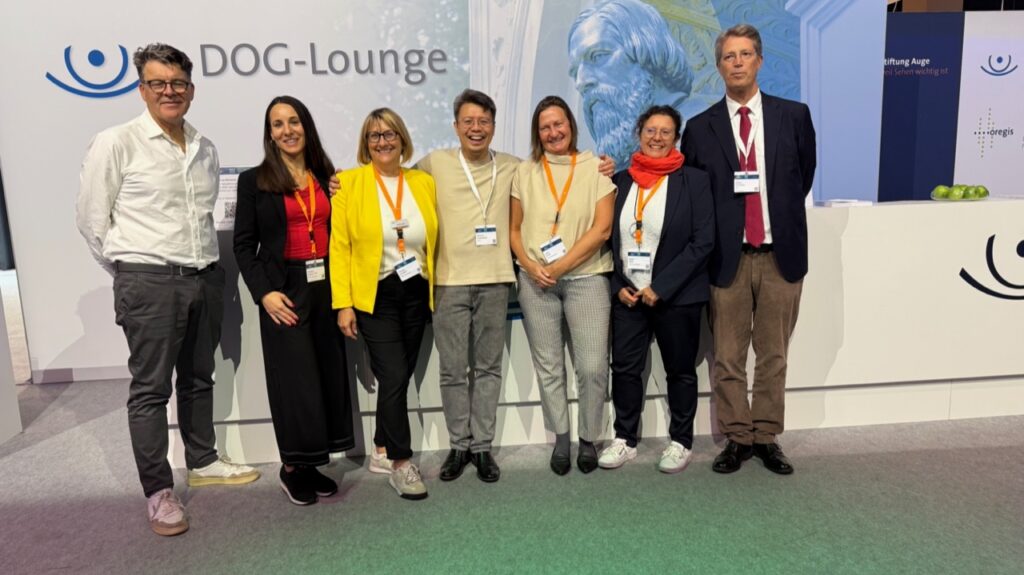
In Berlin, I finally met the organizers who made my participation possible. It was a truly eye-opening experience, and one that left me eager to return to the DOG again soon.
Editor’s Note: This content is intended exclusively for healthcare professionals. It is not intended for the general public. Products or therapies discussed may not be registered or approved in all jurisdictions, including Singapore. A version of this article was first published in PIE Issue 37.